English
- 中文
- English

Why is China's foreign trade growing against the trend?
The China Container Industry Association recently stated that since July, China's export volume has sharply increased, and the demand for export containers has skyrocketed. Both the maritime market and the China Europe freight train have experienced shortages of container sources, soaring freight rates, and delayed turnover. In response, the Ministry of Commerce of China said at a regular press conference that since this year, in response to the severe challenges brought by the COVID-19 to the development of foreign trade, the State Council has introduced a series of policies and measures to stabilize foreign trade in accordance with the decisions and deployment of the CPC Central Committee. China's foreign trade continues to stabilize and improve, playing an important role in ensuring the stability of the global industrial and supply chains and promoting global economic recovery.
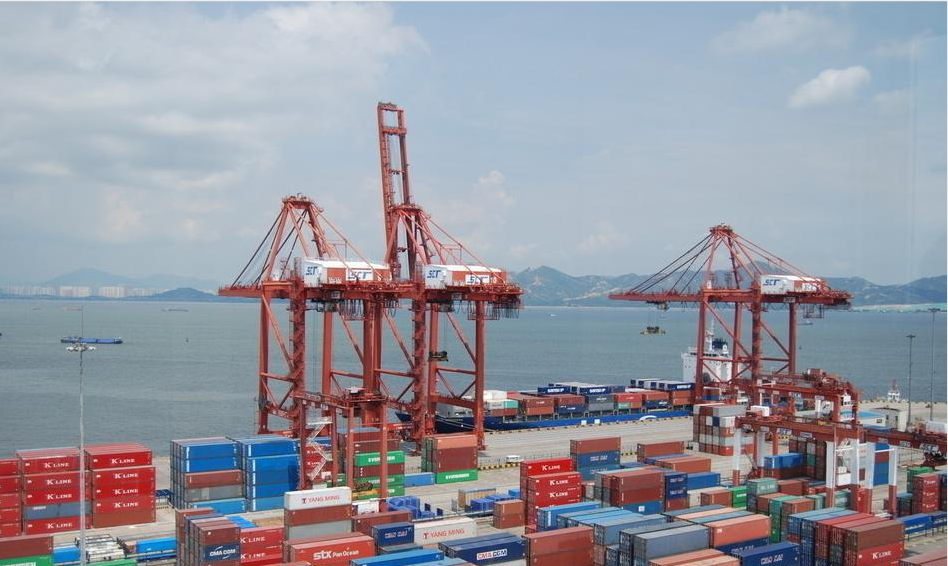
The frequent occurrence of "black swans" in 2020 has brought great challenges and pressure to China's foreign trade. However, when looking back at the end of the year, there were also surprises and surprises - according to statistics from the General Administration of Customs, from January to November this year, China's total import and export value of goods trade was 29.04 trillion yuan, an increase of 1.8% compared to the same period last year. Among them, in November, China's foreign trade import and export value was 3.09 trillion yuan, a year-on-year increase of 7.8%. According to data statistics, in the first three quarters of this year, China imported and exported 187.39 billion yuan through the customs cross-border e-commerce management platform, a year-on-year increase of over 50%. According to data released by the European Union Statistics Office recently, the total trade in goods between the EU and China in the first three quarters was 425.5 billion euros, a year-on-year increase of 3%. China continues to maintain its position as the EU's largest trading partner
Against the backdrop of a significant decline in global trade, China's foreign trade as a whole is showing a trend of counter market growth. In response to this, Yu Xuejun, Chairman of the Supervisory Board of State owned Key Financial Institutions of the China Banking and Insurance Regulatory Commission, mainly discussed two points when analyzing the reasons at the 5th New Financial Forum in 2020:
Firstly, as a major manufacturing country, China has a complete range of industrial categories, especially in the production and manufacturing of consumer goods such as electronic consumer products, which have advantages in the industrial chain and supply chain.
"After the outbreak of the global COVID-19, China was the first to control the spread and spread of the epidemic, and took the lead in resuming production, so that the advantages of production and manufacturing can be reflected. However, many countries in Southeast Asia, such as India, are unable to curb the spread of the epidemic, so many production cannot be recovered as soon as possible. Therefore, many orders are now redirected to China, resulting in the so-called" order explosion "phenomenon," Yu Xuejun said.
Secondly, it is related to the resurgence of appreciation pressure on the Chinese yuan. Under the severe impact of the COVID-19, the Federal Reserve has implemented an unlimited QE policy since March this year. Although its asset size has increased rapidly, it exceeded $7 trillion in August. At the same time, the dollar index has rapidly declined from nearly 100 to about 91 now (as of the time of press release), which has also changed the strong dollar situation since 2013. The Federal Reserve's ultra loose monetary policy, coupled with the significant weakening of the US dollar, has enabled the renminbi to enter an appreciation channel since May, rising from approximately 7.1:1 US dollars at the beginning to 6.55:1 US dollars now. Faced with the situation of RMB appreciation, many business and economic figures have unanimously called for the RMB not to appreciate too quickly.
However, Yu Xuejun believes that whenever the renminbi faces pressure to appreciate, China's foreign trade situation is good, and whenever the renminbi faces pressure to depreciate, China's foreign trade situation is not good.
Since May, the situation where China's foreign trade exports have been growing against the trend is actually related to the RMB appreciation that occurred during the same period. On the other hand, it is precisely because of strong exports that the pressure on RMB appreciation is driven. The two are complementary and mutually reinforcing, "said Yu Xuejun.
China has great potential for foreign trade, with strong resilience, competitiveness, and a stable industrial chain. Enterprises have strong innovation awareness and market development capabilities, and the long-term trend of foreign trade development has not changed, "commented Li Xingqian, Director of the Foreign Trade Department of the Ministry of Commerce.
The reporter observed that although developed economies such as the United States, Japan, and the European Union have been hit by the epidemic, their economic resilience is strong and their consumption capacity is high. Effective domestic control of the epidemic in China is conducive to achieving the resumption of manufacturing work and production. When the manufacturing industry in other regions of the world faces difficulties in restoring production, the supply of Chinese products to foreign demand naturally becomes a trend. Moreover, for a long time, the supply chain of Chinese products has been relatively stable and can better meet the needs of foreign importers. In terms of consumer goods categories, due to the impact of the epidemic, the middle class abroad is unable to travel and consume, so they have increased their consumption in decorating houses, replacing furniture, household appliances, and other aspects.
In the second half of this year, there was a significant increase in export orders for the furniture and home appliance industries. According to data from Alibaba International, as of the end of October, the furniture industry's transaction volume increased by 191% year-on-year, and the number of payment orders increased by 112% year-on-year. Furniture products such as sofas, beds, office desks and chairs, dining tables and chairs, and children's beds are most popular in overseas markets. According to data from the General Administration of Customs, in November, China's seven major categories of labor-intensive products, including furniture, exported a total of 418.17 billion US dollars, an increase of 11.1%, accounting for 18.8% of the total export value. The cumulative growth rate of China's household appliance exports has increased from negative 2.8% in January June to 9.7% in January October, and the cumulative amount has also increased from 4.2% to 19.1%.
Text excerpted from: China Trade News Network
Contact us
Add:Room 617,No.4 Zhudian Road, Nansha District, Guangzhou.China.
E-mail:admin@eylog.cn
Website:www.eylog.cn
Phone

+86-15019429549
QQ Customer service

Contact Us